Parabeton
Most Popular
•
Documentary, 01-Jan-2012
Parabeton starts with the first still existing dome built of concrete by the Romans in the 1st century BC in Baiae near Naples. Followed in chronological sequence by 17 buildings of Italian civil-engineer Pier Luigi Nervi (1891-1979) – inventor, grandmaster of concrete structures and the architect’s architect of the 20th century: among others the Pirelli-skyscraper in Milano, the Headquarters of Unesco in Paris, the Palazzo del Lavoro in Turin, the Palazzo Dello Sport in Rome and the Papal Audience Hall at Vatican City. This succession is from time to time halted by cinematic studies of large Roman structures, among others the Pantheon and the Baths of Caracalla in Rome and Hadrian’s Villa in Tivoli. In doing so the film relates Nervi’s path-breaking constructions with the pioneering Roman inventions in his field 2000 years ago.
Festivals & Awards:
- Berlinale Forum, 2012
- BAFICI Buenos Aires Festival Internacional de Cine Independiente, 2012
- European Media Art Festival Osnabrueck, 2012
- Villa Romana, Florenz, 2012
- Kaunas IFF Litauen, 2012
- Vancouver International Film Festival, 2012
- Viennale – Vienna International Film Festival, 2012
- Underdox Filmfestival, 2012
- Film Fest Gent, 2012
- International Environmental Film Festival Paris, 2013
- Dokumentarfilmwoche Hamburg, 2013
Up Next in Most Popular
-
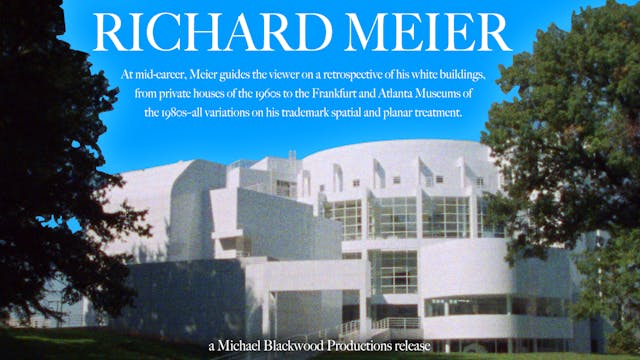
Richard Meier
Abstract architect and artist, Richard Meier, guides us on a detailed retrospective of his famed white buildings. Throughout his career, during which he designed a number of private homes and public establishments, Meier cites names such as Corbusier, Wright and Mies as his heaviest influences. S...
-
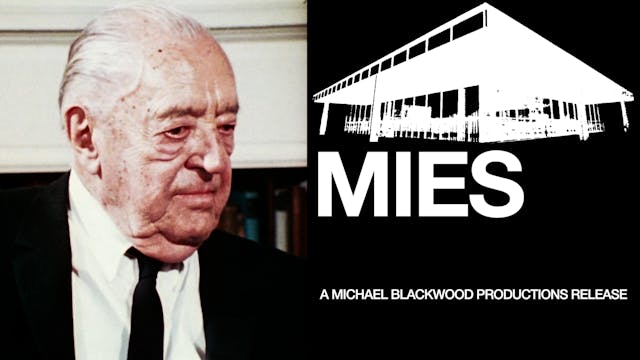
Mies
No understanding of the modern movement in architecture is possible without knowledge of its master builder, Mies van der Rohe. Together with documentations of his life, this film reviews all his major work and offers rare footage of Mies explaining his philosophy. Phyllis Lambert relates her cho...
-
Land Artists
Denton Corker Marshall is one of the world’s most influential and iconic architecture firms. They have produced distinct, innovative and memorable architecture and urban design both in Australia and internationally. Works such as the Stonehenge Visitors Centre, Manchester Civil Justice Centre, Me...